
Water Evaporation During a Texas Summer: What’s Normal and When Should You Be Concerned?
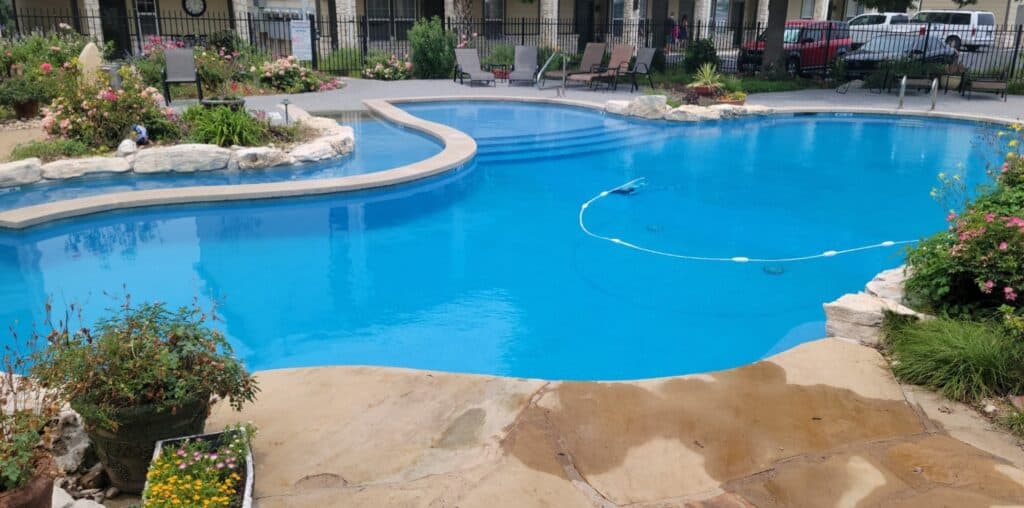
If you’ve found yourself adding water to your pool more often during the summer, you’re not alone. Central Texas summers bring scorching temperatures, plenty of sunshine, and often a breeze—all of which can cause your pool to lose water more quickly.
But how do you know if what you’re seeing is normal evaporation or the sign of a leak?
Here’s what every pool owner should know.
Yes, Pools Naturally Lose Water
Every swimming pool loses water through evaporation. During the hottest months of the year, it’s completely normal for that rate to increase.
Several factors can speed up evaporation, including:
- Temperatures climbing into the upper 90s and 100s
- Long hours of direct sunlight
- Windy conditions
- Low humidity
- Water features like fountains or waterfalls
- Kids spending hours splashing and swimming
In Central Texas, it’s common for a pool to lose about ¼ to ½ inch of water per day during the peak of summer. While that may seem like a lot, it’s often nothing to worry about.
When Water Loss Might Be a Problem
If you’re constantly reaching for the garden hose, it may be time to investigate a little further.
Some signs that your pool could have a leak include:
- Losing more than ½ inch of water each day on a regular basis
- Wet or soggy areas around the pool
- Cracks in the deck or pool structure
- Air bubbles coming from your return jets
- Your pump losing prime or struggling to maintain water flow
- Frequently needing to add water, even when the weather hasn’t been especially hot
Leaks can happen in plumbing, fittings, liners, equipment, or the pool shell itself, so it’s best not to ignore them.
Try the Bucket Test
Not sure whether you’re dealing with evaporation or a leak? A simple bucket test can help.
- Fill a bucket with pool water until the water inside is level with the pool water outside.
- Place the bucket on a pool step so it’s partially submerged.
- Mark both water levels with tape or a marker.
- Wait 24 hours without adding water to the pool.
- Compare the two water levels.
If the pool water drops significantly more than the water inside the bucket, you may have a leak that needs professional attention.
Tips to Reduce Evaporation
While you can’t stop evaporation completely, there are ways to slow it down.
Consider these simple tips:
- Use a pool cover whenever the pool isn’t in use.
- Run fountains and waterfalls during the cooler morning or evening hours instead of all day.
- Keep your water level at the proper height.
- Make sure your pool equipment is operating efficiently.
These small changes can help conserve water and reduce the amount of time you spend refilling your pool.
When to Call a Professional
A missed service visit. A little evaporation is expected during a Texas summer. But if you’re noticing excessive water loss or suspect a leak, it’s worth having your pool inspected before a small issue turns into an expensive repair.
At CenTex Pools, we help homeowners throughout Central Texas keep their pools operating at their best all season long. If you’re unsure whether your pool is simply losing water to the summer heat or something more serious is going on, our team is here to help.
Need help keeping your pool in top shape this summer? Submit a quote or contact CenTex Pools today to schedule professional pool service or a leak evaluation.